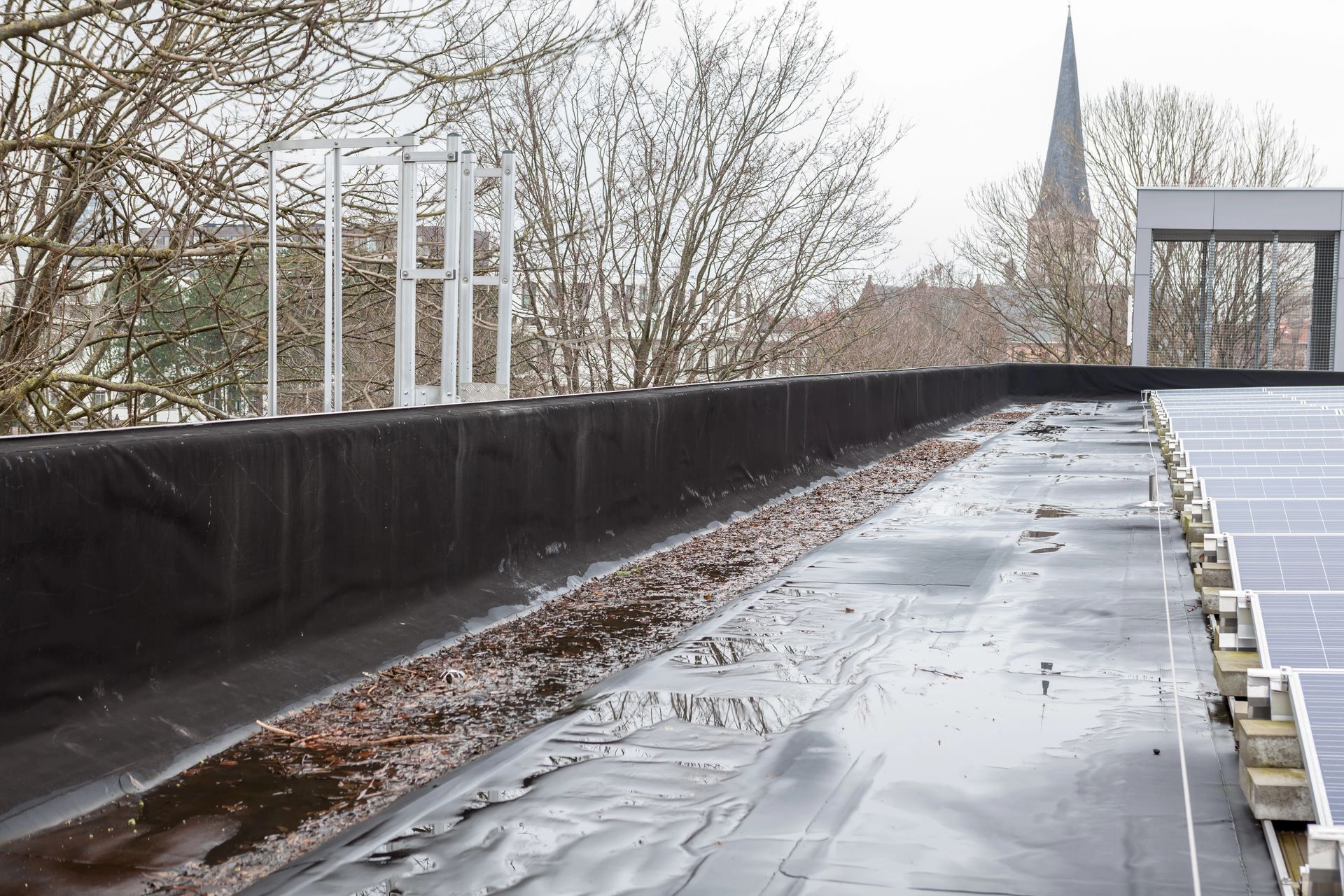
Standing water on a flat roof, often referred to as ponding water, is a common problem in Quebec, especially after heavy rainfall, during winter thaws, or in the spring. A small amount of water that remains temporarily is not always a major concern, but if water stands for too long or keeps coming back, it can accelerate membrane wear and increase the risk of leaks.
Here is a clear guide to understanding the causes, risks, and most common solutions.
If you notice water remaining for more than 24–48 hours after rain or melting snow, the right step is a roof inspection to identify the exact cause, whether it involves drainage, sagging, flashing, or the membrane.
Why does water stand on a flat roof?
A flat roof is never perfectly “flat.” It must have a minimum slope toward drains or gutters. When water accumulates, it is generally because the path to drainage is no longer effective.
Cause #1: clogged drains or insufficient flow
- Leaves, gravel, debris, ice
- Missing or damaged drain basket
- Undersized drain for the roof area
- Accumulation around the drain, due to reverse slope
In many cases, preventive maintenance already solves part of the problem.
Cause #2: inadequate slope, or a slope that has changed
- Insufficient slope from the original construction
- Insulation that has sagged over time
- Structural movement, deflection, or sagging
- Accumulated repairs that create “low spots”
When the slope is the issue, the solution is often a correction during roof restoration, such as tapered insulation or crickets, through a roof restoration.
Cause #3: deficient flashing and waterproofing details
Even when water stands, a roof in good condition can remain watertight… until the details become deficient:
- Cracked or poorly sealed flashing
- Insufficient upstands
- Seams around penetrations, such as vents and mechanical units
- Poorly protected parapets and corners
For flat roofs, these details are critical. Consult our roofing membrane options.
Cause #4: ice and freeze-thaw cycles
In Quebec, ice can block drains, create dams, and force water to remain in place longer, especially during thaw periods.
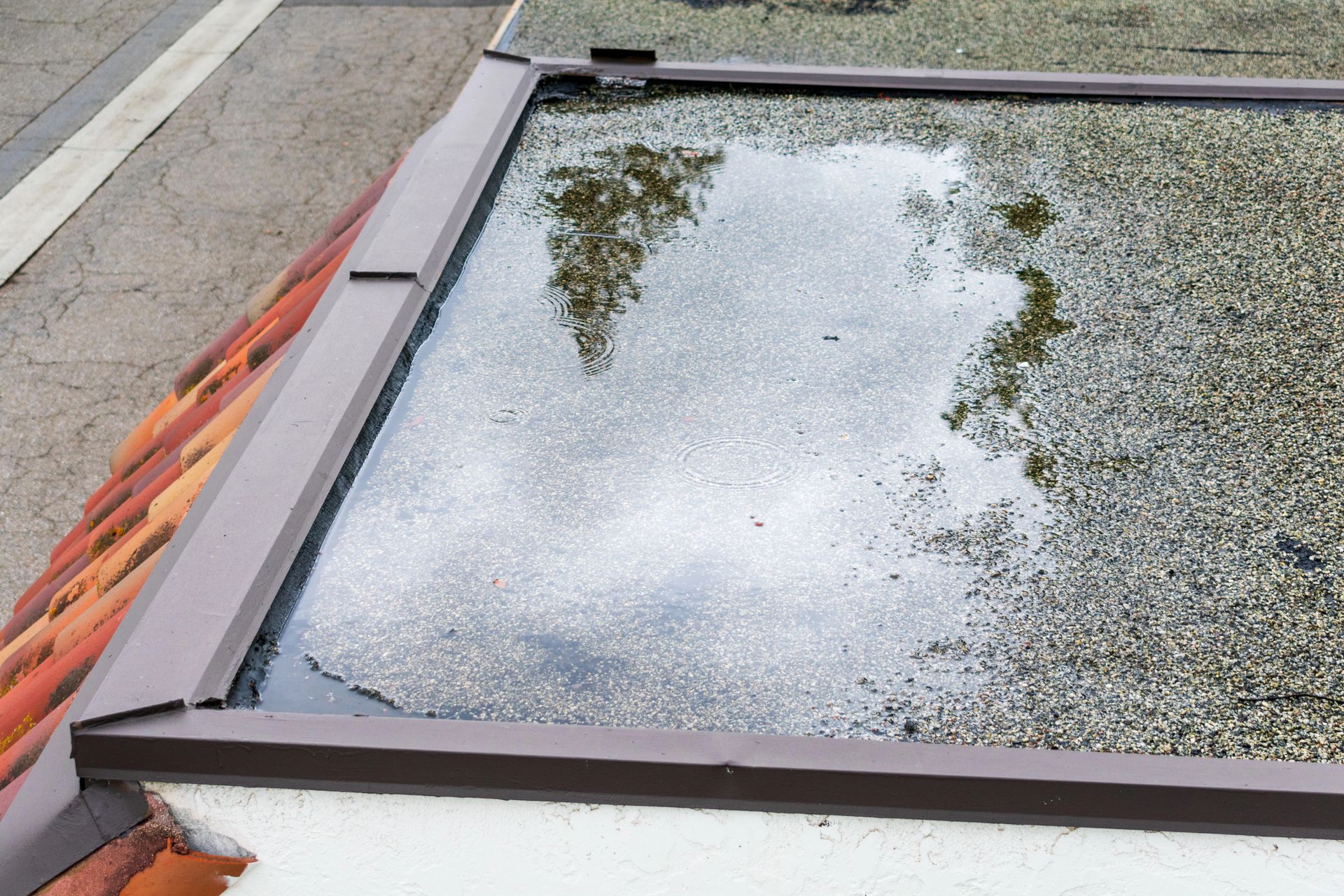
The risks of standing water, which should not be underestimated
1) Accelerated membrane wear
Standing water increases stress on the membrane and can accelerate:
- Microcracks
- Delamination
- Blisters, especially if moisture is already trapped
- Premature aging
2) Leaks and interior damage
Water always looks for a weak point: seams, flashing, penetrations. A small leak can become:
- Mould
- Damage to ceilings and insulation
- Corrosion or material degradation
If you suspect a leak, have a roof inspection done quickly.
3) Additional load, from water and snow
Water accumulation adds weight. Combined with snow, it increases the load on the structure.
4) Insurance and warranty issues
Some warranties require minimum maintenance, such as keeping drains clear. Chronic standing water that is not corrected can complicate the handling of a claim.
Solutions: what to do, and what to avoid
Solution 1: clear and secure the drains
Often, this is the simplest correction:
- Cleaning drains and baskets
- Adding a basket or strainer
- Inspecting downspouts for obstructions farther down the line
- Checking for the presence of multiple drainage points
This should be integrated into a roof maintenance plan, including seasonal inspections, especially in the fall and spring.
Solution 2: correct slopes, with tapered insulation or crickets
When the problem is structural or design-related:
- Adding tapered insulation toward the drains
- Installing crickets behind mechanical units and obstacles
- Correcting “low spot” areas
- Sometimes, adjusting the position of drains
This is typically done during roof restoration.
Solution 3: repair or reinforce flashing and details
If water stands near parapets, penetrations, or seams:
- Reworking flashing
- Sealing and upstands
- Local reinforcement, depending on the system
- Checking corners, seams, and transitions
A complete flat roof inspection is often recommended to map out risk areas.
Solution 4: partial or complete roof restoration, depending on condition
If the membrane is at the end of its lifespan, repairing it piece by piece often becomes more expensive over the medium term.
➡️ A roofing quote based on an inspection helps determine whether to choose:
- Targeted correction
- Partial roof restoration
- Complete roof restoration with optimized slope
How do you know whether it is “normal” or problematic?
In practice, it becomes concerning when:
- Water remains for more than 24–48 hours after rain or melting snow
- The same area always accumulates water
- You see blisters, cracks, or seams opening
- Stains appear on the ceiling
- Drains often overflow or freeze
In these cases, a roof inspection is the best decision, and often the least expensive one in the long term.
How can LK Toitures help you?
At LK Toitures, we do not just “pump the water”: we identify the cause in order to correct the issue sustainably.
We can support you with:
- Roof inspection, including drainage, membrane, and flashing diagnosis
- Roof maintenance, including cleaning, prevention, and seasonal inspections
- Roof restoration, including slope correction
- Roofing membrane solutions adapted to your building
- And much more!
Request a quote through our contact page today.