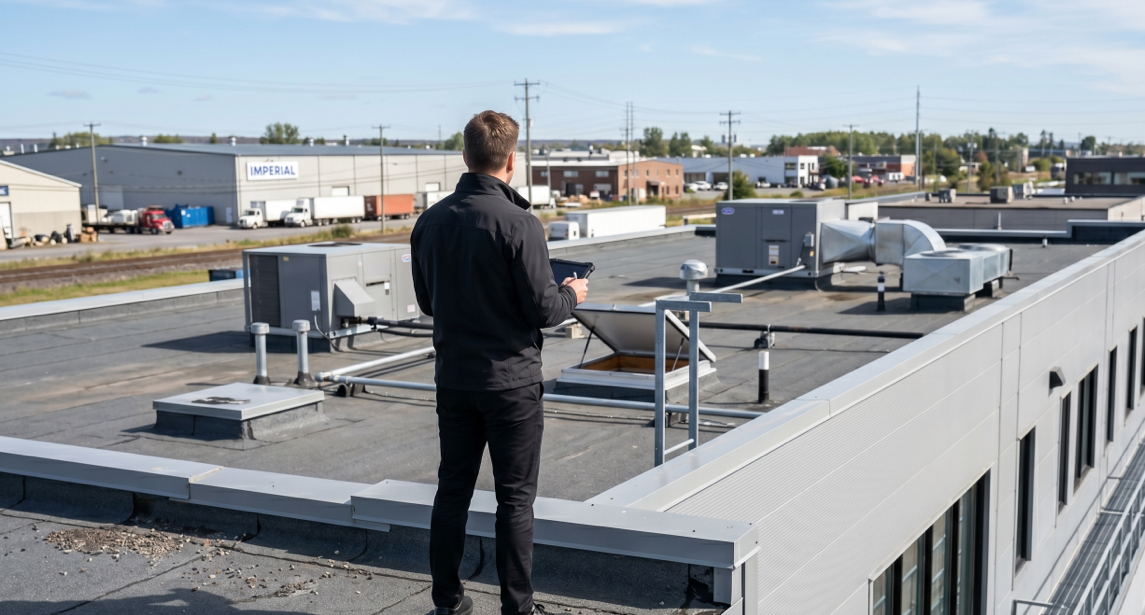
When you request a roof inspection, you know it’s important. But do you know exactly what is being checked? For a property manager, understanding what happens during an inspection helps to better evaluate the value of the report received, ask the right questions, and better plan future interventions.
Step-by-step breakdown of key inspected elements
Here is a step-by-step look at the main elements a specialist examines during a comprehensive commercial roof assessment.
1. Overall condition of the membrane
The membrane is your first line of defense against water. The specialist examines its general condition across the entire surface, looking for cracks, blisters, wrinkles, discolored or thinning areas, and signs of premature wear. On a modified bitumen (SBS) membrane, they will check the condition of the granules, seam fusion, and any lifting. On a TPO or EPDM membrane, they verify weld integrity and material flexibility.
The choice of material significantly impacts the lifespan of your roof, as explained in our article on how to choose the right material for your commercial roof.
2. Drains and water Drainage
On a flat roof, proper water evacuation is critical. The specialist checks:
- Drain cleanliness: Leaves, debris, sediment, or nests can clog a drain.
- The condition and fastening of drain strainers (baskets).
- The presence of standing water
- The integrity of the clamping ring and membrane connection
- Drainage capacity relative to the total surface area.
A poorly maintained drain is one of the most common causes of standing water on a flat roof, leading to accelerated membrane degradation.
3. Flashings and upstands
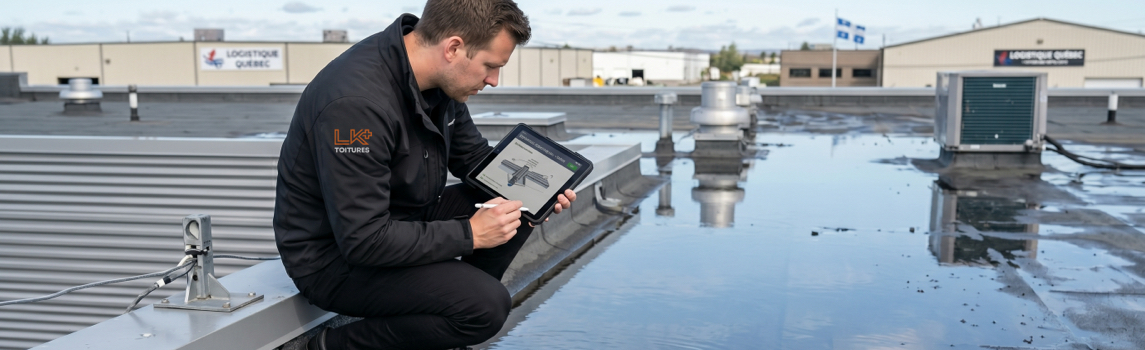
Flashings ensure watertightness at critical junctions such as parapet walls, chimneys, mechanical equipment, and skylights. These are sensitive areas that require special attention.
The specialist checks flashing adhesion, the condition of sealants, the height of the upstands (often required by building codes), any signs of pulling away, and structural movement. Quality sheet metal work (flashing) also plays a decisive role in the longevity of a commercial roof.
4. Seams, Sealants & Penetrations
Every penetration through the roof—such as plumbing stacks, vents, supports, and anchors—is a potential leak point. The specialist examines:
- The condition of pipe boots, collars, and caps.
- The state of sealants (hardening, cracking, shrinkage).
- Membrane seams, overlaps, and joints.
- Exposed fasteners and their protective coatings.
5. Rooftop mechanical equipment
HVAC units, exhaust fans, and other equipment installed on the roof create significant stress, including vibrations, oil leaks, frequent foot traffic, and concentrated loads. The specialist inspects the condition of the membrane underneath and around this equipment, the integrity of the curbs (bases), and any damage caused by the foot traffic of HVAC technicians.
6. Water ponding and slope
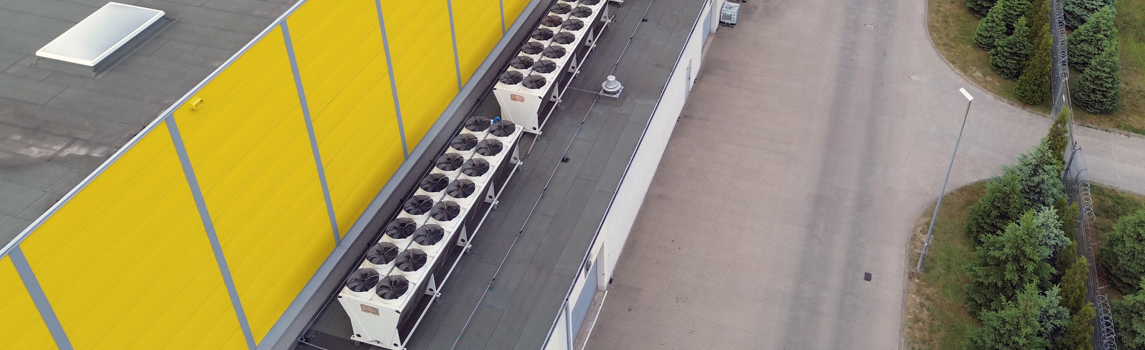
When the inspection takes place following a rainy period, the specialist maps out areas where water accumulates. Persistent ponding water beyond 48 hours usually indicates a problem with the slope, drainage, or structure. This is a key indicator to include in future project planning.
7. Perimeter and parapet condition
The perimeter of the roof is often where leaks begin. The specialist examines coping caps, fascias, wall flashings, and anchors. On older buildings, waterproofing and insulating the perimeter may be a top priority.
8. General wear and aging signs
The specialist also evaluates the overall level of wear: granule loss, drying out, loss of elasticity, oxidation of metal components, and the presence of vegetation. These subtle warning signs, cross-referenced with the age of the roof, allow for an accurate estimation of its remaining lifespan.
Trust your roof inspection to a specialized team
A rigorous inspection is the foundation of any sound roofing decision. At LK Toitures, our technical representatives deliver clear reports, backed by photos and accompanied by a structured budget plan, so you know exactly where you stand and where you are heading.
For commercial buildings of 5,000 sq. ft. and over, we offer a comprehensive inspection. Contact our team to schedule yours today.